About this blog

I feel this blog as a reflection of my thoughts to myself , and sometimes as a public diary, and the is my only friend to share my thoughts who says never a "oh no! ,you shouldn't....That is boring...."

Define God

A scientist with an h-index of 1 but citations are about a million or beyond.

What are the conditions that make it hard to represent systems using the neural networks or deep NN

Neural networks, while powerful tools for modeling and learning complex systems, face several challenges when it comes to representing certain types of systems. These challenges typically arise due to the nature of the system itself or the limitations of the neural network architectures being used. Some conditions that can make it hard to represent systems using neural networks include:

1. High Complexity or Non-Linearity

  • Systems with highly complex or non-linear relationships: Neural networks, especially shallow ones, may struggle to represent highly complex or chaotic systems where small changes in input lead to disproportionately large or unpredictable changes in output. This is especially true when the relationships between inputs and outputs are not smooth or are highly discontinuous.
  • Long-range dependencies: Some systems require the model to capture long-term dependencies, such as in time series or sequential data. Neural networks like vanilla feedforward networks or even basic recurrent neural networks (RNNs) may fail to capture long-term dependencies effectively due to issues like vanishing or exploding gradients.

2. Insufficient or Noisy Data

  • Limited data: Neural networks typically require large amounts of data to generalize well. If there is insufficient data or the data is sparse, the model may overfit or fail to learn the true underlying patterns of the system.
  • Noisy data: Real-world systems are often noisy. If the data has a lot of noise, neural networks might learn irrelevant patterns, reducing their ability to generalize to new, unseen data. For systems where noise is intrinsic and cannot be easily separated from the signal, this becomes a major challenge.

3. Lack of Interpretability

  • Black-box nature: Neural networks are often considered "black-box" models, meaning their decision-making process can be opaque and hard to interpret. For certain systems, particularly in safety-critical areas (e.g., healthcare, finance, or autonomous vehicles), the lack of interpretability is a major barrier, as understanding the system's behavior is crucial.
  • Interpreting relationships: For some systems, especially those involving causal or physical laws, it is important to understand the exact relationships between variables. Neural networks can model complex patterns but often do so in ways that obscure causal relationships, making it difficult to understand why a particular output was generated.

4. Data Distribution Shifts

  • Non-stationary data: In dynamic systems that change over time (e.g., in economics or climate modeling), the underlying data distribution might shift over time, rendering a trained model ineffective. Neural networks can struggle to adapt to these shifts if they are not designed to handle non-stationary environments.
  • Domain shifts: In cases where the system's operating conditions change (e.g., in transfer learning), a neural network trained on one dataset might not generalize well to another domain or environment without substantial retraining or adaptation.

5. Sparse or Incomplete Feedback

  • Delayed feedback: In many real-world systems (e.g., reinforcement learning problems, robotic control systems), feedback might be sparse or delayed, making it difficult for neural networks to learn the correct mapping between inputs and outputs. Learning can be inefficient when rewards or errors are not immediately available.
  • Incomplete feedback or labels: For supervised learning, systems with incomplete or partial labels (e.g., missing data points or ambiguous outputs) can make it harder for neural networks to learn accurate representations of the underlying system.

6. High Dimensionality

  • Curse of dimensionality: When systems have a very large number of variables or features, the amount of data needed to accurately train a neural network increases exponentially. High-dimensional spaces also make it harder for neural networks to discover meaningful patterns, as the number of training samples needed to cover the feature space adequately becomes prohibitive.
  • Feature interactions: In high-dimensional systems, capturing interactions between features might require very deep or complex network architectures, which can increase the risk of overfitting or make the training process computationally expensive.

7. Time and Spatial Dependencies

  • Sequential or temporal dependencies: Systems where the output depends on a sequence of previous states (such as in time-series prediction, speech recognition, or video processing) require specialized architectures like Recurrent Neural Networks (RNNs), Long Short-Term Memory (LSTM) networks, or Transformers. However, even these architectures can face challenges with very long sequences or systems that require very fine temporal granularity.
  • Spatial dependencies: In systems where spatial relationships matter (such as image processing, geospatial modeling, or physical simulations), specialized architectures like Convolutional Neural Networks (CNNs) are needed. Yet even these might struggle when the spatial relationships are highly irregular or when the data is sparse.

8. Physical or Causal Constraints

  • Conservation laws or physical laws: In many systems, especially in physics, biology, and engineering, the system behavior is governed by strict laws of conservation (e.g., conservation of energy or mass). Neural networks, as flexible function approximators, may not inherently respect these constraints, leading to predictions that are physically unrealistic. Methods like physics-informed neural networks (PINNs) attempt to overcome this limitation by incorporating these laws into the network design.
  • Causal inference: Systems that require understanding or modeling causal relationships (rather than just correlations) can be difficult for standard neural networks to handle. Neural networks are good at finding associations but often fail to establish direct causal links, which are crucial in fields like epidemiology, economics, or policy-making.

9. Generalization to Unseen Conditions

  • Out-of-distribution (OOD) generalization: Neural networks can struggle when presented with data that is significantly different from the data they were trained on. If a system experiences a new scenario that has not been encountered in the training data (e.g., rare events or extreme conditions), neural networks may not generalize well, leading to poor performance.
  • Extrapolation: Neural networks are good at interpolating between known data points but often struggle with extrapolation—predicting outcomes for inputs outside the range of training data. This is especially problematic in systems with extreme or rare events.

10. Computational Constraints

  • Resource limitations: Neural networks, especially deep networks, can require a significant amount of computational resources (memory, storage, processing power). For large-scale or real-time systems, this can be a barrier, particularly in embedded systems, mobile devices, or other environments with limited computational capacity.
  • Training time: Some systems may require a substantial amount of training data or time to converge, which can be a limitation for rapidly evolving systems or systems where real-time feedback is needed.

Conclusion

While neural networks are highly versatile and powerful tools for modeling complex systems, they are not a one-size-fits-all solution. The conditions listed above highlight the types of systems where neural networks may face significant challenges or where alternative methods (e.g., physical modeling, rule-based systems, or simpler machine learning models) may be more appropriate. Overcoming these challenges often involves combining neural networks with domain-specific knowledge or using hybrid approaches that integrate symbolic reasoning, physics-based modeling, and other forms of structured learning.

baby's growth month-by-month Physical Growth: Gestures and Movements: Social and Emotional:

Tracking a baby's growth month-by-month can help you understand their development and ensure they are meeting typical milestones. Here are common signs and gestures you might expect from birth to one year:

1 Month

  • Physical Growth: Slight weight gain, increasing head control.
  • Gestures and Movements: Reflexive movements (e.g., grasping), limited head control.
  • Social and Emotional: Recognizes parent’s voice, may start to smile.

2 Months

  • Physical Growth: Increased weight and length.
  • Gestures and Movements: Starts to lift head and push up when on tummy.
  • Social and Emotional: Begins to smile at people, can briefly calm themselves.

3 Months

  • Physical Growth: Continued steady growth in height and weight.
  • Gestures and Movements: Improved head control, opens and shuts hands, brings hands to mouth.
  • Social and Emotional: Smiles spontaneously, enjoys playing with people.

4 Months

  • Physical Growth: Noticeable growth in length and weight.
  • Gestures and Movements: Rolls from tummy to back, holds head steady, reaches for toys.
  • Social and Emotional: Laughs out loud, shows excitement.

5 Months

  • Physical Growth: Continues steady growth.
  • Gestures and Movements: Begins to sit with support, rocks back and forth.
  • Social and Emotional: Recognizes familiar faces, shows emotions like happiness or discomfort.

6 Months

  • Physical Growth: Growth rate may slow a bit.
  • Gestures and Movements: Rolls over in both directions, starts to sit without support.
  • Social and Emotional: Enjoys playing with others, especially parents, responds to own name.

7 Months

  • Physical Growth: Continues growing steadily.
  • Gestures and Movements: Transfers objects from one hand to the other, starts crawling.
  • Social and Emotional: Shows fear of strangers, responds to expressions of emotion.

8 Months

  • Physical Growth: Growth continues.
  • Gestures and Movements: Stands while holding on, sits without support.
  • Social and Emotional: Develops stranger anxiety, enjoys social play.

9 Months

  • Physical Growth: Steady growth.
  • Gestures and Movements: Pulls to stand, crawls well.
  • Social and Emotional: Uses fingers to point at things, understands "no."

10 Months

  • Physical Growth: Growth continues at a steady pace.
  • Gestures and Movements: Stands with support, begins to cruise (walking holding onto furniture).
  • Social and Emotional: Waves "bye-bye," enjoys imitating sounds and gestures.

11 Months

  • Physical Growth: Ongoing growth in height and weight.
  • Gestures and Movements: May stand alone, starts to take steps without holding on.
  • Social and Emotional: Has favorite toys, shows strong attachment to caregivers.

12 Months

  • Physical Growth: Growth continues, but rate may slow.
  • Gestures and Movements: May walk independently, drinks from a cup.
  • Social and Emotional: Shows preference for certain people and toys, repeats sounds or actions for attention.

Remember that each child is unique and may reach these milestones at their own pace. If you have concerns about your baby’s development, it’s always best to consult with a pediatrician

A probability question on Sudoku Grid

 What is the probability that given n trials to fill the numbers in Sudoku grid how many(X) valid numbers will filled at the end ?

What is the probability distribution for the random variable X ?


Currently working on ...

 Working with two scholars on two themes.

Theme1: Constrained PDE optimization

Theme2 : Cortical surface reconstruction using level sets.

If cheese do not show up your video on linux

 Check if sudo cheese work ?

If works, then add user to the "video" group (if exists)

then login afresh or (temporary )instantiate the group video .


Theorems on Roots of Polynomials in Geometry, Topology, Complex Analysis and Functional Analysis

 Roots of Polynomials
Prof. V. Kannan
Dept. of Mathematics
SRM University-AP
23 February 2022

Abstract: "We discuss four classical theorems on roots of polynomials. They relate to four
different branches of Mathematics, namely, Geometry, Topology, Complex Analysis and
Functional Analysis. The theorems are stated below:
Theorem 1 (Lucas). Every root of the derivative of a polynomial lies within the convex
polygon formed by the roots of that polynomial.
Theorem 2: The roots of a polynomial vary continuously with its coefficients.
Theorem 3 (Cauchy): If all the coefficients of a polynomial lie in the unit disc D, then all
the roots lie in the disc 2D.
Theorem 4 (Bernstein): The norm of the linear operator D (namely the differentiation) on
(The space of polynomials of degree at most n on D) is exactly n."

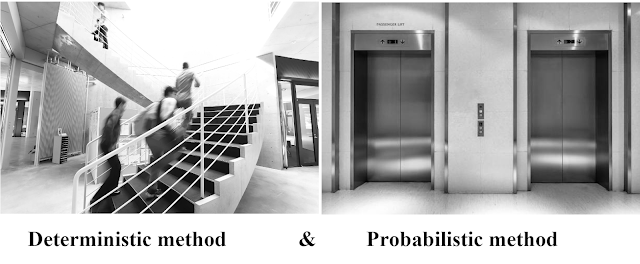
Deterministic approach Vs Probabilistic approach

The time taken will be deterministic if you proceed by steps else it will be random variable.

Stone weight in your ornament formula - మీ నగల్లో ఉన్న రాయి బరువెంత ?

d1 and d2 are densities of gold and the stone, resp.

densities can be found by the standard density tables online for various stones and gold types.

M and V are the total mass and volume of the ornament.

Mass is easy. 

Volume can be easily found by dipping in water in a graduated cylinder or volumetric glass of chemistry lab.
 

20km-cycling circuit- 80minutes 2022 vijayawada


Solution to purge Static built up charge in the laptop circuit board.

 On the net, the common suggestions are to take the battery out and let the circuit discharge the static.

What I did is I attached as many USBs I can, Mouse, Power bank, External Hard drive, HDMI cable, few pen drives . Then pressed the power button.

 Bingo !

How do you know if the problem on you HP laptop  is due to static built up ?

Answer: Press the power button for 15 seconds and release, you will see a small blink at button and one more at Capslock.

Define a Mathematician

One who studies Roman and Greek alphabets and the relationships within.